Corporatology 006: Hail, Miranda
The most radical thing a leader can do during performance review season is not to abolish the process, but to refuse the gods behind it.


Notes from the Arena of Appraisal
“For we are God’s masterpiece. He has created us anew in Christ Jesus, so we can do the good things He planned for us long ago.” — Ephesians 2:10 (NLT)
The Performance Trap
In the corporate system, performance is currency—and identity becomes collateral damage. You start as a person and end as a résumé. The applause feels holy until it stops, and you realize you don’t know who you are without it.
Just me?
You crave feedback like oxygen.
You scroll metrics like scripture.
You mistake visibility for value.
Probably just me, huh?
The system trains you to believe that the only “enough” is the version of you that’s performing.
But it’s a trap. The moment the charts dip or the inbox quiets, your worth starts to wobble. Suddenly, the silence feels like failure.
And then, annually, each of us enters the arena of appraisal,
where criteria cuts and merit bleeds.
You were never meant to live contending for affirmation.
You were meant to be—anchored, whole, already a victor.
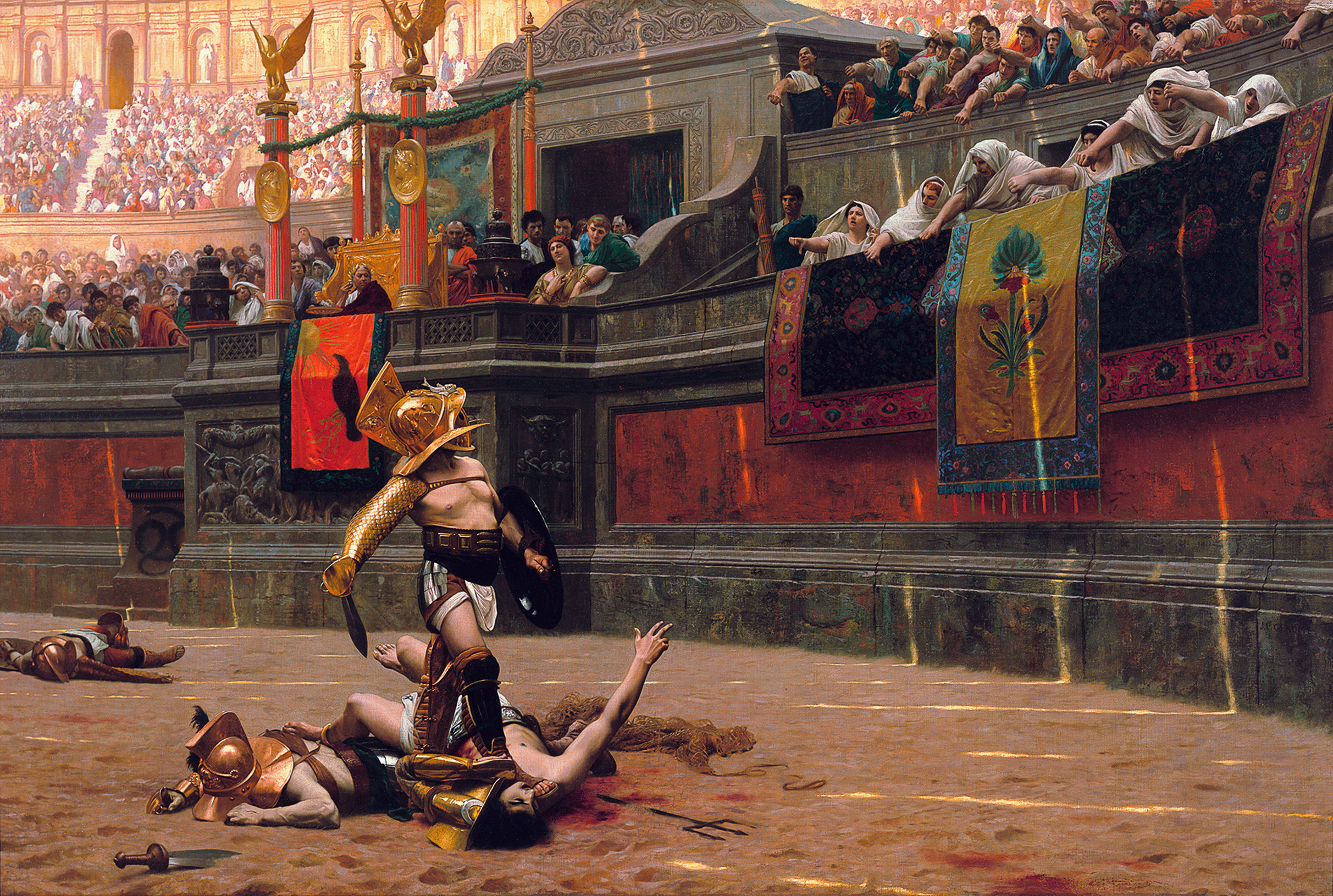
The Arena of Appraisal
A Gladiatorial Rating Scale
Each year, you are summoned.
Not to be known—but to be tested.
Five contenders stand before you.
Each demands proof. Each promises survival.
5 — Moloch
The God of Sacrifice
You did not merely survive—you bled.
You stayed when others rested.
You absorbed what should never have been yours.
You proved devotion by endurance.
Victory condition:
You gave more than was asked and called it commitment.
What the crowd cheers:
Your exhaustion.
Your availability.
Your silence.
Moloch is a god who demands sacrifice to prove devotion.
He is cruel not because he punishes failure, but because he is never satisfied—every offering only sharpens his appetite.
4 — Sauron
The God of Visibility
You were seen.
You showed up everywhere.
You spoke often.
You stayed lit, active, present.
Victory condition:
Your work was impossible to ignore.
What the crowd cheers:
Your responsiveness.
Your presence.
Your constant watchfulness.
Sauron is a power that rules by sight rather than relationship.
His cruelty lay in this: what could not be seen, tracked, or controlled is treated as a threat.
3 — Umbridge
The God of Compliance
You followed the rules.
You used the right language.
You documented everything.
You stayed agreeable, correct, pleasant.
Victory condition:
Nothing escalated.
What the crowd cheers:
Your attitude.
Your adherence.
Your willingness to stay within the lines.
Umbridge smiles as she disciplines, insisting the system is for your own good. Obedience matters more than truth—and dissent is reclassified as deficiency.
2 — Miranda Priestly
The God of Unspoken Excellence
You understood the standard.
You anticipated the ask.
You delivered without explanation.
You did not need praise.
Victory condition:
You met expectations that were never spoken.
What the crowd admires:
Your composure.
Your discernment.
Your ability to endure silence.
Miranda Priestly rules by excellence without explanation.
Her cruelty lay in this: approval was rare, disapproval was subtle, and worth was measured by proximity to perfection.
1 — The Crowd
The God of Judgment
The Crowd is one of the most important figures in the arena.
They’re not loud villains. They’re worse: they feel inevitable.
You did not prevail.
The work was insufficient.
The sacrifice unconvincing.
The visibility lacking.
Verdict:
Thumbs down.
You are escorted from the arena—
not because you lacked worth,
but because the gods were not satisfied.
The Crowd does not act; it reacts.
Its cruelty lies in this: judgment is collective, anonymous, and never accountable—and once it turns, no explanation is given.
What This Reveals
This scale claims to measure performance.
What it actually measures is allegiance.
And that's where we falter and forget, losing ourselves in the arena.
• Moloch, who demands sacrifice.
• Sauron, who rewards visibility.
• Miranda Priestly, who expects perfection.
• Umbridge, who enforces compliance.
• The Crowd, who decides who survives.
None of them ask:
Who are you becoming?
Was the work faithful?
Did the labor bear fruit without destroying the worker?
Reconcile the Expense
- Only 14% of employees strongly agree that their performance reviews inspire them to improve. (Gallup)
- 56% of employees say their goals are formally reviewed with a manager only once a year or less. (Gallup)
- Employees who receive meaningful feedback weekly are nearly 4× more likely to be engaged than those who receive feedback once a year. (Gallup)
- Only 26% of organizations believe their performance management process effectively enables employee performance. (Deloitte Human Capital Trends)
- Nearly half of employees say traditional performance reviews are unhelpful or stressful rather than motivating. (Harvard Business Review)
A Life-Giving Measurement Rhythm
(Still legible. Still accountable. No arena required.)
This kind of system doesn’t ask once a year,
“Did you win?”
It asks, regularly:
- Where did your work give life this quarter?
- Where did it cost more than it returned?
- What outcomes came from your strengths—not your strain?
- What should continue?
- What should stop?
- What needs protection?
Instead of an annual verdict, there is ongoing discernment.
Instead of ranking, there is alignment.
Instead of sacrifice, there is stewardship.
Performance is measured—
but never worshiped.
The Living God
The God of Faithfulness
He does not heckle from the stands.
He does not rank contenders.
He does not wait for blood to prove devotion.
Victory condition:
He is the Victory
What He names instead:
Faithful.
Whole.
Fruitful in season.
God is not impressed by sacrifice that destroys the one offering it.
His judgment is not a verdict on output, but a witness to becoming.
Under Him, work is received—not demanded—and worth is never up for debate.
A Modern Corroboration
In Love + Work, Marcus Buckingham makes a blunt case:
Performance reviews don’t improve performance—they distort it.
They ask people to defend the past instead of shaping the future.
They collapse complex human contributions into a single score.
And they reward visibility and conformity over distinct, life-giving excellence.
Buckingham argues that people don’t grow under judgment—they grow under attention.
Not annual verdicts, but frequent, forward-looking conversations about where work gives energy, traction, and meaning.
In other words: the problem isn’t accountability.
The problem is turning performance into an arena.
Escaping the Arena
The most radical thing a leader can do during performance review season is not to abolish the process.
It is to refuse the gods behind the process.
To measure contribution without consuming the contributor.
To tell the truth without breaking the person.
To remember that people are not gladiators—
they are image-bearers.
Belonging was never meant to be earned in blood—
Christ already paid that cost. 🤍